
Hair · Explainer
What rice water actually does for your hair (and what it does not)
An old ritual that went viral. What the cloudy water can and cannot do, and how to try it at home.

By Claire Whitman, Hair & Beauty Editor
Updated November 4, 2026 · 3 min read
Rice water became a social media trend, but the habit is old. Court women in Heian-era Japan, more than a thousand years ago, were said to wash their famously long hair with the water left over from rinsing rice. In Huangluo, a village in southern China, Red Yao women still wash their hair with rice water and are known for hair that reaches the floor.
What it can do
The cloudy part is mostly starch, with a little protein and some minerals. On the hair it forms a light film. Most women notice the same things: strands feel smoother and a little thicker, comb through more easily, and shine more. Smoother strands rub against each other less, which is why some women see fewer snapped pieces in their brush.
What it cannot do
Rice water is a cosmetic rinse. It works on the hair you already have. It does not change what happens under the scalp, and no rinse can promise new growth. If you are suddenly losing much more hair than usual, or losing it in patches, see a doctor before you try anything at home.
How to try it at home
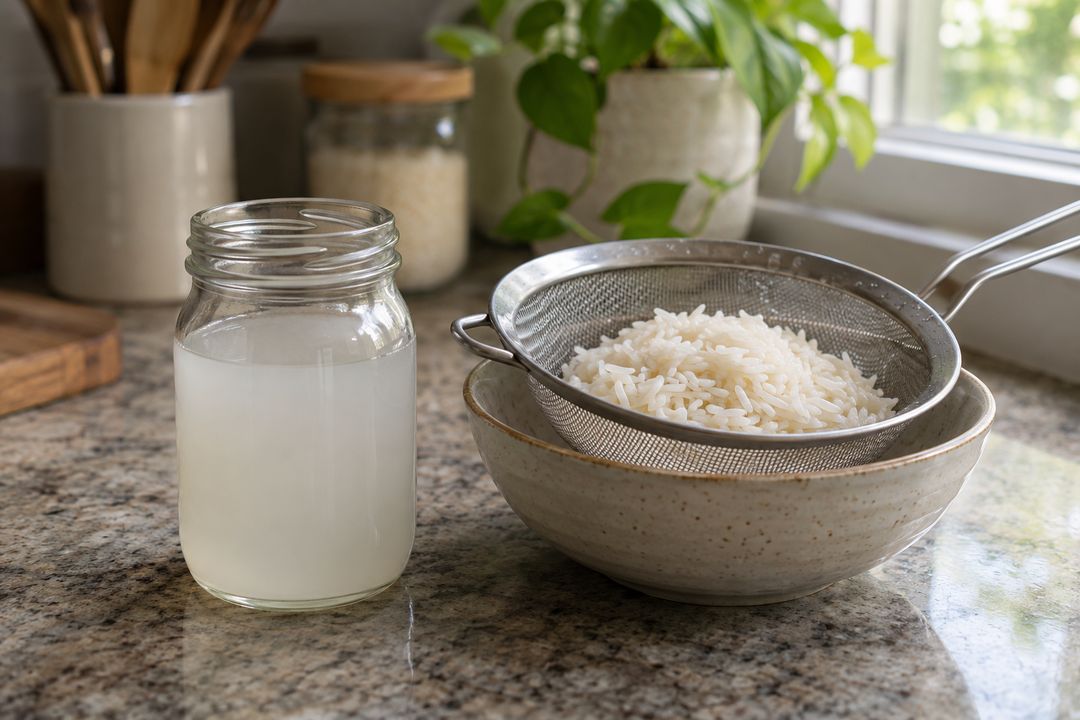
- Rinse half a cup of rice once to clean it, then soak it in two cups of water for about 30 minutes.
- Strain the water into a clean jar. Keep it in the fridge and use it within a day or two.
- After shampooing, pour it over your lengths, leave it for a few minutes, and rinse well.
- Start with once a week. Used too often, protein and starch can leave fine hair feeling stiff or dry.
- Patch test first if your scalp is sensitive.
The hardest part is not the recipe. It is doing it every week. Many women who try it at home stop after a few batches.